
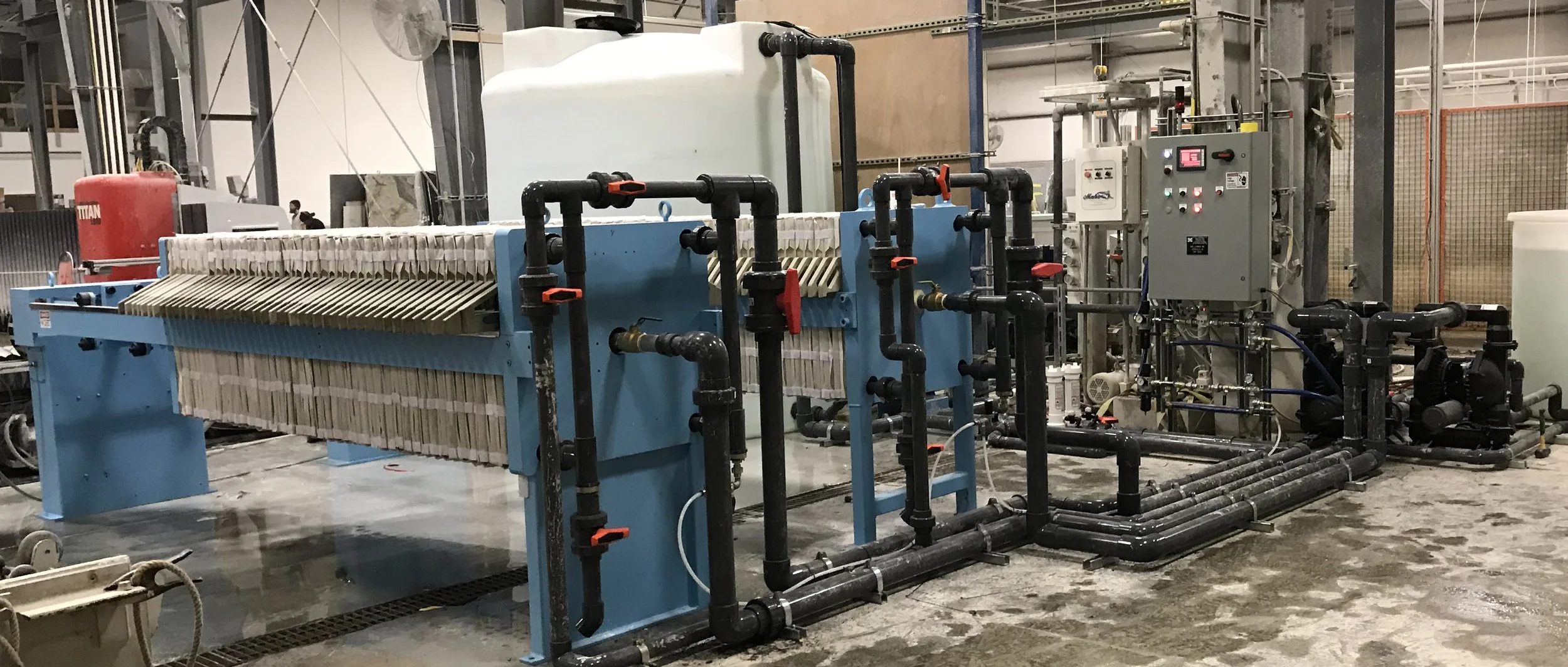
Turning Gray Water Green: How Beckart Filter Presses Transform Cement Paver Operations
Manufacturing cement pavers, blocks, and retaining wall units is a high-volume, water-intensive business. From washing down equipment and wet-casting molds to managing aggregate slurries, plants generate thousands of gallons of heavy, cement-laden wastewater every single day.
For decades, disposing of this slurry or dealing with overflowing settling pits was just considered a standard cost of doing business. Today, rising water acquisition costs, stricter environmental regulations, and the push for sustainable operations have made water recycling and smart sludge dewatering a game-changer.
Enter industrial pressure filtration—specifically, systems like Beckart Environmental Hy-Pack® filter presses. [1, 2]
The Cement Paver Wastewater Challenge
When you cut, grind, or wash concrete and cement products, the resulting washwater is loaded with fine cement particles, sand, and chemical admixtures. Left untreated, this gray water destroys pumps, clogs lines, and oftentimes cannot legally or safely be dumped into municipal sewer systems or local waterways.
Traditional settling pits require frequent (and messy), and still leave you with wet, heavy mud that costs a fortune to haul away.
How a Filter Press Solves the Slurry Dilemma
A filter press takes that messy, high-solids slurry and subjects it to high-pressure mechanical separation. Using Beckart Environmental filter presses equipped with specialized polypropylene recessed plates, the process works in a few clean steps: [1, 2]
Filter Press Precoat: Proprietary precoat material (tailored by water-treatment chemists) is applied at the beginning of each filter press cycle. [1]
High-Pressure Pumping: The slurry is pumped into the precoated filter press chambers. [1]
Solid-Liquid Separation: The liquid (filtrate) passes through engineered filter cloths—leaving behind clean, reusable water—while the solids pack tightly into the chambers. [1]
Solid Cake Discharge: Once the cycle finishes, the plates open up to release dry, solid filter cakes. [1, 2]
Why Cement Paver Plants Are Switching to Beckart Systems
1. Closed-Loop Water Recycling
The filtrate squeezed out by the press is remarkably clean—often containing fewer suspended solids and suitable for looping right back into your mixer wash-down routines, drum cleaning, or batch water makeup. Reducing freshwater intake slashes utility bills immediately. [1]
2. Landfill-Ready Dry Cakes
Instead of dealing with sloppy, semi-liquid sludge that weighs down dumpsters and incurs heavy liquid-hauling penalties, a Hy-Pack® press compresses cement solids into solid cakes that are typically 35% to 50% (or more) dry solids. These dry cakes are easier to handle, and often non-hazardous for standard disposal. [1, 2]
3. Smart Automation & Ergonomics
Modern filter presses don't require round-the-clock babysitting. With automated PLC controls, touch-screen HMIs, and features like Velcro-style filter cloths that swap out in minutes, your crew spends less time on maintenance and more time producing pavers. You can even add accessories like filter press curtains to contain washdown spray during periodic cleanings. [1, 2, 3]
4. Fast Return on Investment (ROI)
When you combine lower municipal water fees, eliminated liquid-waste hauling costs, and extended equipment life (due to cleaner recycled water), a well-sized filter press system pays for itself surprisingly fast. [1]
The Bottom Line
Running a competitive cement paver plant in today’s market means squeezing efficiency out of every square foot of your facility—and every drop of water that comes through the gate. Upgrading from archaic settling pits/lagoons to a dedicated industrial dewatering and recycling setup turns a hazardous waste liability into a streamlined, closed-loop asset.
Are you currently dealing with liquid hauling fees or looking to expand your plant's water recycling capacity? Let us know your daily wastewater volume or current setup so we can share more relevant details.